

Where Does the 7-Minute Rule Come From?
The 7-minute rule is not actually a rule, nor is it a legal requirement. It is a widely accepted interpretation of the guidance in the Fair Labour Standards Act. Specifically, part 29 CFR 785.48(b).
Under this guidance, employers may round time to:
- The nearest 5 minutes, or
- The nearest one-tenth or quarter of an hour
The 7-minute logic applies to rounding time to the nearest quarter of an hour. So:
- 1-7 minutes: Round down
- 8-14 minutes: Round up
Let’s be clear that time rounding is not actually required by the FLSA. However, if it is applied, the FLSA is very firm that the practice must not be biased toward the employer and result in the employee being underpaid.
Instead, it must work out as neutral over time. The exact wording within part 785.48(b) is:
“For enforcement purposes, this practice of computing working time will be accepted, provided that it is used in such a manner that it will not result, over a period of time, in failure to compensate the employees properly for all the time they have actually worked.”
Is the Rule Outdated?
If you think the 7-minute rule sounds a bit outdated, then you’re right.
Historically, time rounding was introduced when payroll was performed manually or with crude time clocks. Converting punches into 5 - 15 minute blocks reduced calculation errors and the time to process the workforce’s wages.
While it made sense then, it’s not necessary now because precise time tracking and clocking in/out software exists.
However, the 7-minute rule survives because the FLSA still permits it.
Additionally, some employers choose to keep rounding because they believe it evens out small anomalies. For example, an employee clocking in a few minutes late or early each day due to variabilities in their commute.
There's also a practical argument that payroll is simpler to process when everything fits into clean 15-minute blocks.
Overall, rounding serves as a payroll convenience rather than a legal obligation.
Examples of the 7-Minute Rule
To better understand how the rule works, here are some examples:
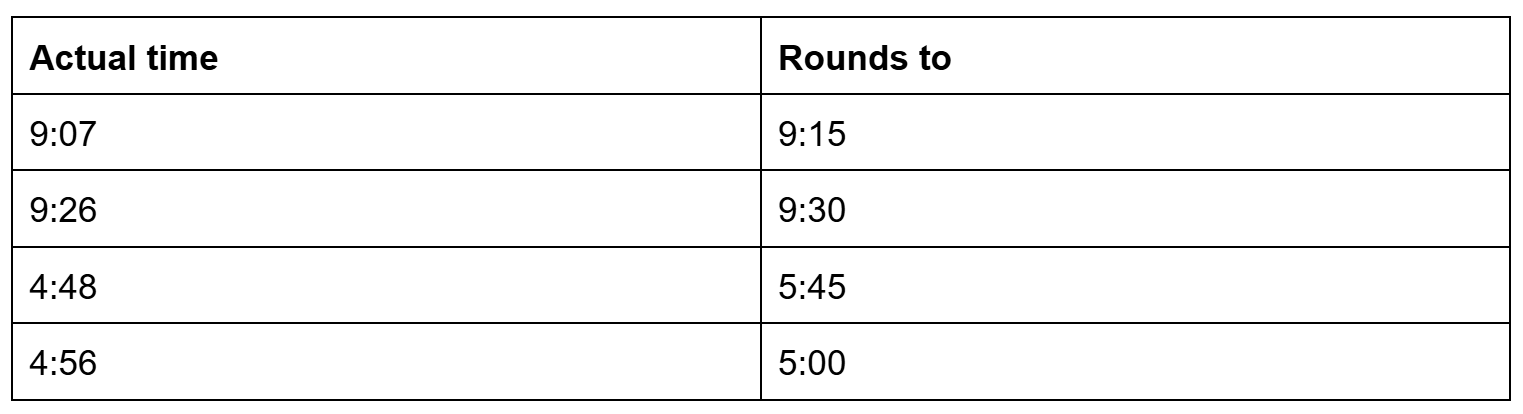
So, if a worker clocks in at 8:05 each day, this will round to 8:00. And, if they leave at 5:10, the time rounds to 5:15.
The net effect is that the employee benefits because they gain time without actually working it.
In contrast, if a worker clocks in at 8:08, the time rounds to 8:15. And if they clock out at 5:07, the time rounds down to 5:15.
In this case, the net effect is that the employee loses time and the employer gains the advantage.
The Risks of Applying the 7-Minute Rule
The Department of Labor (DOL) doesn’t care about your rounding method; they only care about the outcome.
- If it regularly favors the employer, then it’s illegal.
- If it remains neutral, then it’s fine.
- If it benefits the employee more than the employer, then the DOL won’t step in. It’s a problem the employer must address.
This means the problems start when time rounding is found to consistently benefit the employer. If this is the case, then it can trigger wage-and-hour liability under the FLSA, particularly for minimum wage and overtime.
Common illegal practices include:
- Always rounding down
- Paying according to schedules instead of actual time
- Ignoring early clock-ins
- Using rounding to drop a worker’s hours under the 40-hour threshold and avoid overtime payments
Risks to the employer include:
- Back wages that accumulate across multiple shifts or pay periods.
- Overtime underpayment disputes.
- Per-shift time errors that scale across the workforce, resulting in class or collective actions.
- Recordkeeping violations if the timekeeping system does not show actual punches, edits, and approvals.
Violations are caught, and the penalties are hefty. One 2025 federal investigation of a construction firm in Florida led to almost $600k being paid out in back wages and damages to 419 workers.
Gaming the system
Another side effect of time rounding is that once workers figure it out, they can use it to their advantage.
For example, arriving at work at 8:07 means that time is rounded to 8:00, meaning they gain seven minutes of pay. Or, waiting until 5:08 to clock out so the time rounds up to 5:15.
In this case, gaming is a sign that the rounding rule is poorly controlled. The bigger compliance issue is still whether the employer is accurately paying for hours worked.
State-Level Rules for Time Rounding
Some states have tightened the rules around time rounding and made it stricter to ensure workers are fairly compensated:
- California only allows time rounding when clocking in and out of a shift. However, since 2021, rounding time for meal periods is not permitted.
- In Washington, time rounding is permitted for clocking in and out, but employers must use an appropriate timekeeping system that accurately records 15-minute segments of worktime. Like California, rounding time for meal and rest periods is not permitted.
Why Many Companies are Abandoning Time Rounding
Although there are some benefits to time rounding, many companies are ditching it because modern systems can track exact minutes worked. And the legal risk now outweighs administrative convenience.
For example, time tracking software allows workers to record accurate timesheets, and real-time clocking in/out systems and geofencing are also extremely precise.
This means neither the company nor the employee misses out on time, and the company can avoid all the potential legal issues that come with time rounding practices.
Also, for most companies, payroll and reporting are already automated. Therefore, it just doesn’t make sense to apply a practice that was designed for manual processes.
Best Practices for Applying the 7-Minute Rule
If you really want to implement time rounding, here’s how to do it in a legal and compliant way:
- Use the standard increments as set out by the FLSA (5 minutes, or one-tenth, or quarter hour).
- Implement a system that can reliably track and perform time rounding. Do not rely on manual spreadsheets and calculations.
- Perform regular neutrality audits to compare actual worked time vs. paid time. Look for net losses per worker and any patterns that favor the company.
- Have a clear policy for time rounding, including an escalation process for anyone found to be abusing the system (both at the managerial and employee level).
- Never allow time rounding to reduce overtime eligibility.
- Add controls that prevent manual overrides to time entries and log all changes and edits to time data (creating an audit trail).
- Exempt meal and rest periods from generic rounding where state law requires it.
Time tracking software: features to look for
The right choice of software for time rounding is essential because it can mean the difference between a legally defensible, neutral practice and exposure to employee lawsuits.
Here are the features that you should look for:
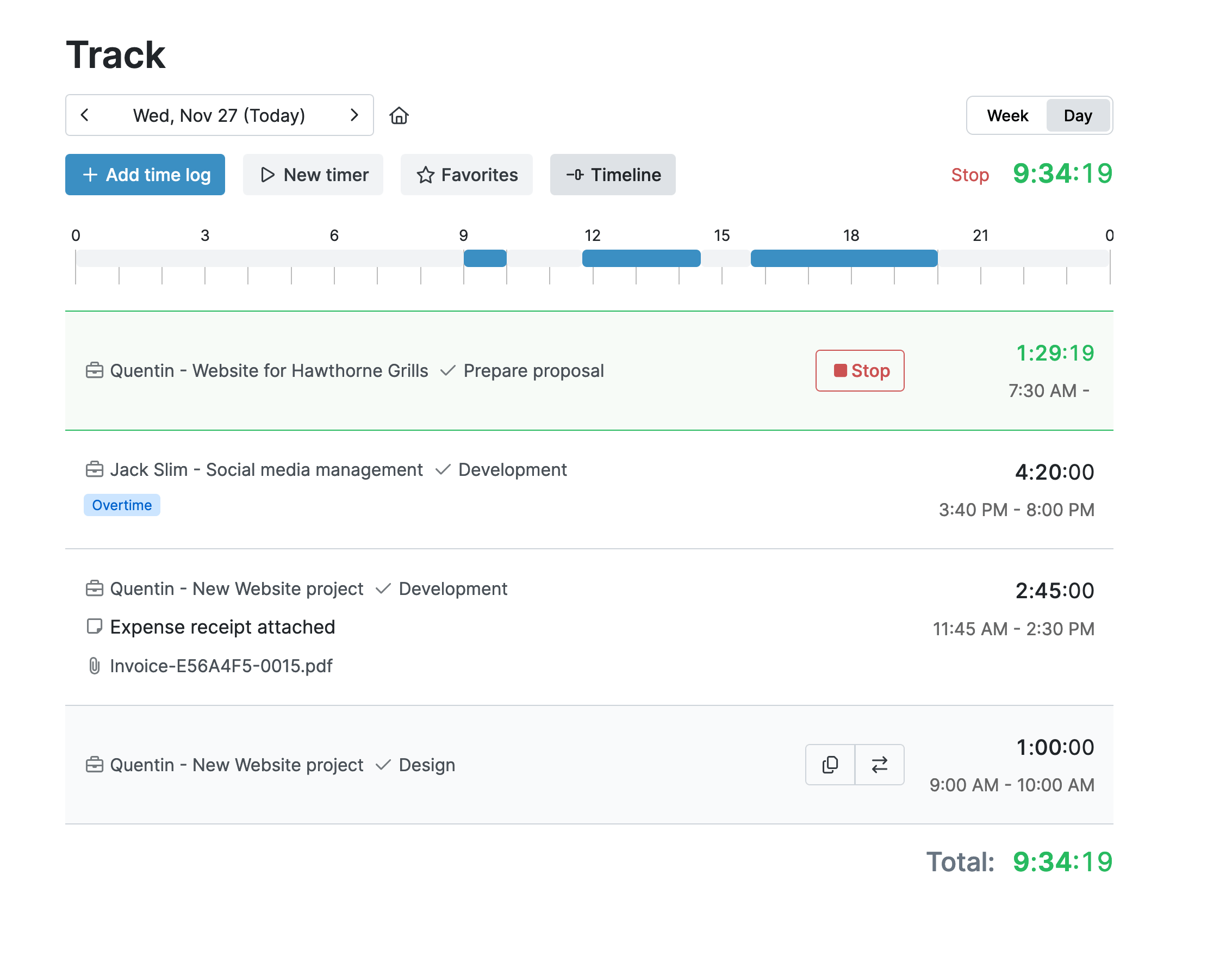
- Real-time capture: The system must track in real time, providing exact timestamps for start and finish times and break periods. This raw data, without rounding, is crucial because it allows you to prove neutrality.
- Configurable rounding rules: The system should support time rounding in accordance with FLSA guidance, plus the ability to turn it off entirely.
- Actual vs. paid time: Your system must be able to show actual time worked against paid/rounded time to protect against wage disputes.
- Audit trails: The system must track and document all changes and adjustments to time data for transparency.
- Data locking: To prevent manipulation, time data should be made uneditable after submission.
Final Thoughts
The 7-minute rule probably isn’t going away anywhere soon. But to be seen as an attractive place to work, ditching it will put you ahead of your competitors.
If you are considering time rounding, think hard about the reasons why. In many cases, updating your current tracking system to something more precise and modern might be the smarter, safer solution altogether.


