
.png)
Why Record Retention Rules Are So Confusing
Retention rules rarely come from a single source.
Let’s take the USA as an example. You’ve got the FLSA, which governs labor laws on a federal scale. But each state also has its own set of labor laws. Then you have authorities like the IRS, DCAA for government contractors, HIPAA for health records, and others.
This means that a single record, like payroll, might be required by several different authorities, each with its own retention rules.
Most businesses (no matter where they are based) end up facing overlapping requirements from:
- Tax authorities
- Labor regulators
- Financial auditors
- Customers and contracts
- Industry regulators
- Insurance providers
Naturally, global businesses face the most complexity because they operate across multiple jurisdictions. That generally means there’s a set of tax and labor laws for each jurisdiction, and regulators for each country in question.
The Golden Rule of Record Retention
There’s one huge, overriding takeaway from this article that you should remember:
The longest applicable retention requirement usually determines how long records should be kept.
So, if the:
- Tax authorities say 3 years
- Labor laws say 6 years
- Regulators say 5 years
Those records should stay put for at least six years.
A Scenario-Based Record Retention Framework
There’s a problem with organizing your retention policy around document type (invoices, timesheets, payroll reports, and so on).
Why? Because the same document can serve multiple purposes.
Instead, we’ll organize record retention around several key business scenarios.
Don’t ask “How long should these documents be kept?” Instead, ask “Why do these documents exist?”
This means you’ll need to:
- Identify the business scenario
- Identify the retention drivers for that scenario
- Choose the most conservative retention period
- Store records securely and consistently
- Define a policy for when and how records will be deleted
Let’s now get into the most common scenarios. Depending on the type of business you run, you might not need all of these, or there may be scenarios not covered here.
However, once you know how to use this framework, you can apply it to any additional scenarios that come up.
Scenario 1: Payroll and employee records
Let’s start with some of the most sensitive and heavily regulated datasets of an organization.
We’re talking about:
- Timesheet and attendance records
- Payroll registers
- Payslips
- Employment contracts
- Pension and benefits documentation
- Leave and absence records
- Performance reviews
- Exit and termination records
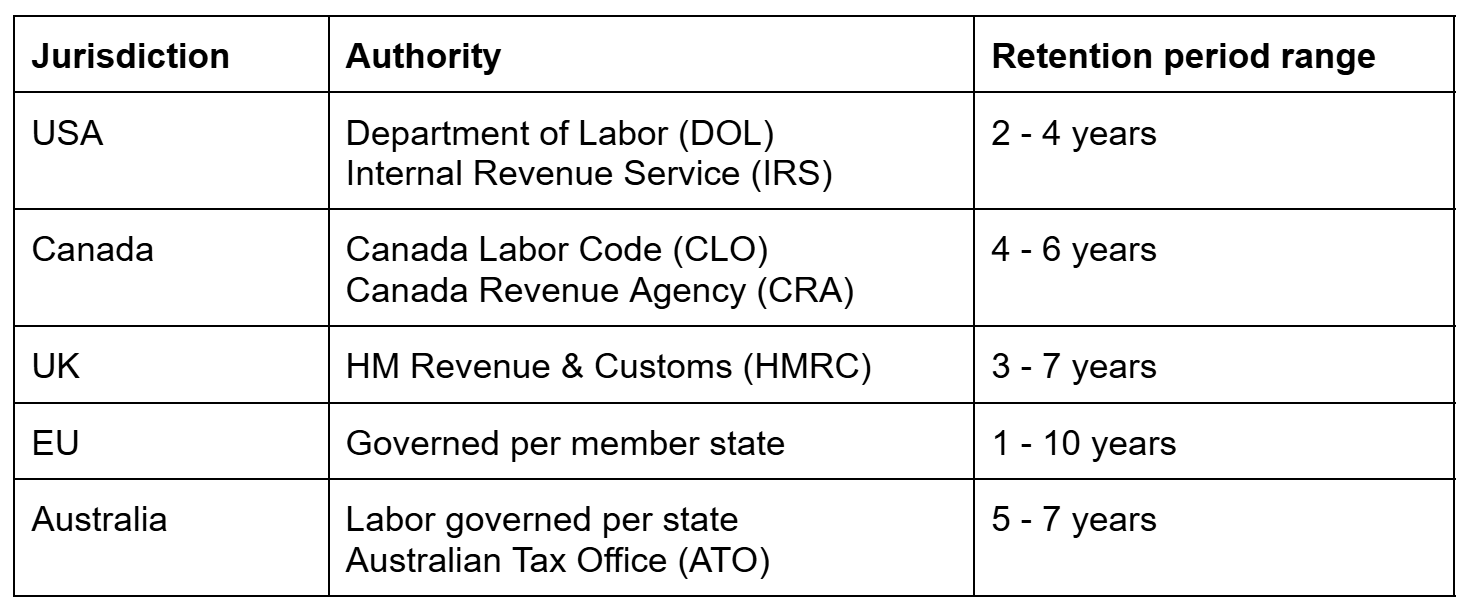
In this case, retention is driven by labor laws and the tax authorities. You should also consider employee disputes, since claims can arise years after the work was performed.
All employee data must be stored securely. Use access controls (including least privilege access) to prevent unauthorized access. Clear file naming conventions are a must to make file retrieval easy.
Here’s a breakdown of key jurisdictions and the record retention period range. To find exact retention times, consult the governing authority for your jurisdiction.
Scenario 2: Financial records
This is another major area, since financial records are required for tax reporting and audits. Every organization has retention obligations here, regardless of size and location.
Typical records include:
- Invoices and receipts
- Bills
- Purchase orders
- Expense reports
- Bank statements
- Accounting ledgers
- Tax filings
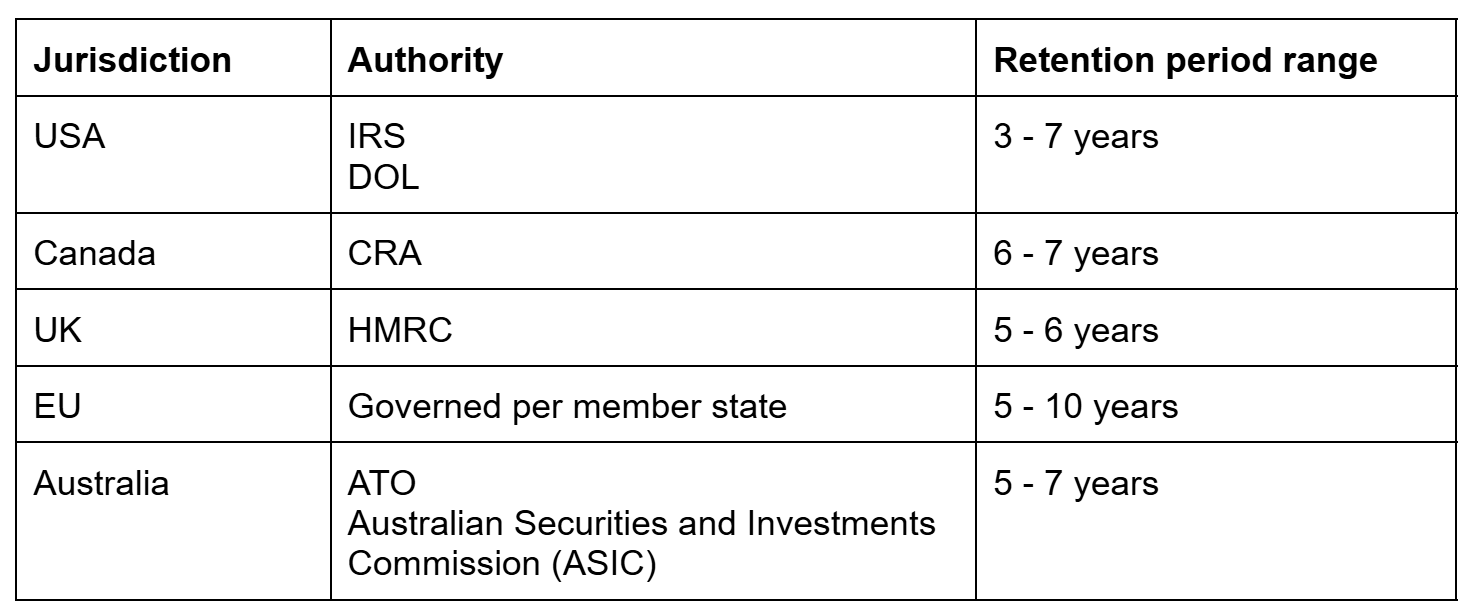
In this scenario, retention requirements are usually led by tax authorities and financial reporting standards.
It’s important to store financial records in a centralized system, since fragmented storage across legacy systems or shared drives makes retention policies difficult to enforce.
In most jurisdictions, digital copies are preferred, and all records must be readable and complete.
Here are the retention ranges:
Scenario 3: Research and development (R&D)
Many organizations, particularly startups, engage in product development or research technical solutions. And the records produced in R&D extend beyond normal accounting requirements.
Examples of R&D documentation include:
- Time and cost records
- Project files and technical notes
- Design files
- Experimentation and test results
- Version histories
- Development plans
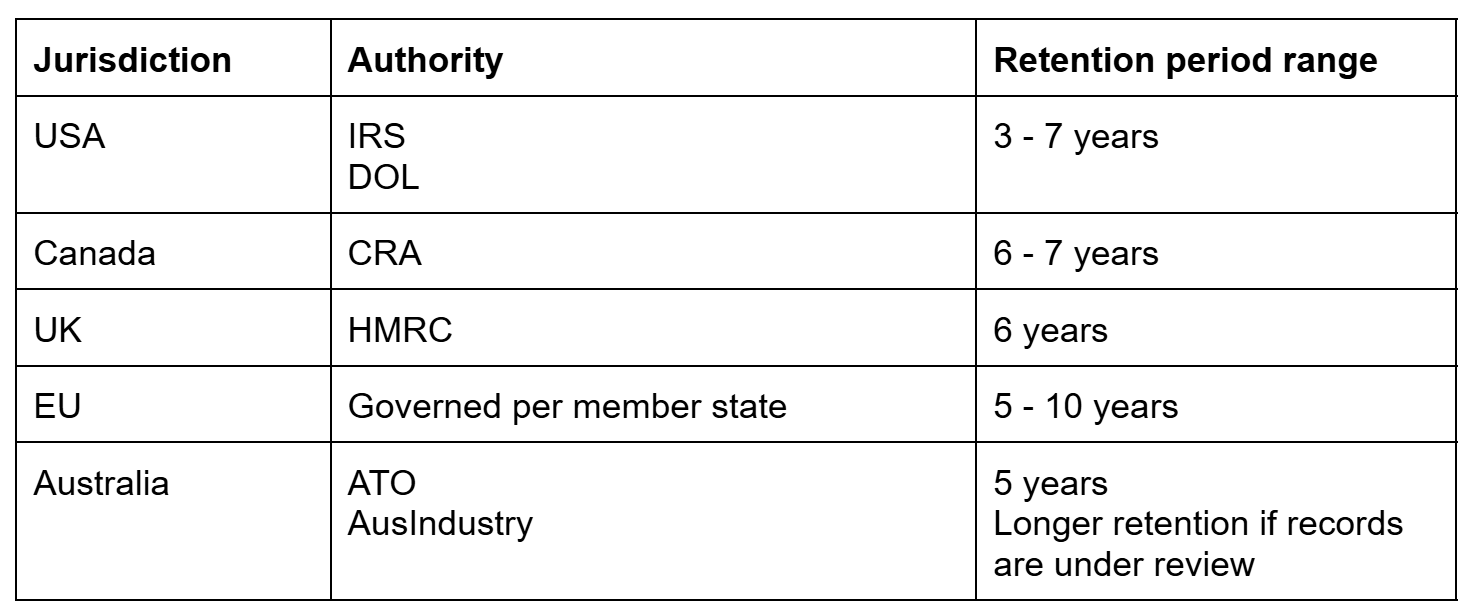
R&D record retention is largely driven by tax incentives (deductions and credits). Intellectual property protection and due diligence also play a role.
Solid version history retention and change tracking are just as important as the final documents because they provide an audit trail of why decisions were made.
Since this scenario tends to carry extensive documentation, a well-organized filing system and file naming convention are essential.
Here are the retention ranges:
Scenario 4: Contracts and clients
It’s common for organizations to perform work under some form of contract. These range from informal to strictly regulated and controlled.
Records here include:
- Contracts and agreements
- Tracked time and costs for contracted deliverables
- Statements of work
- Change requests
- Client communications
- Project schedules
- Acceptance documentation
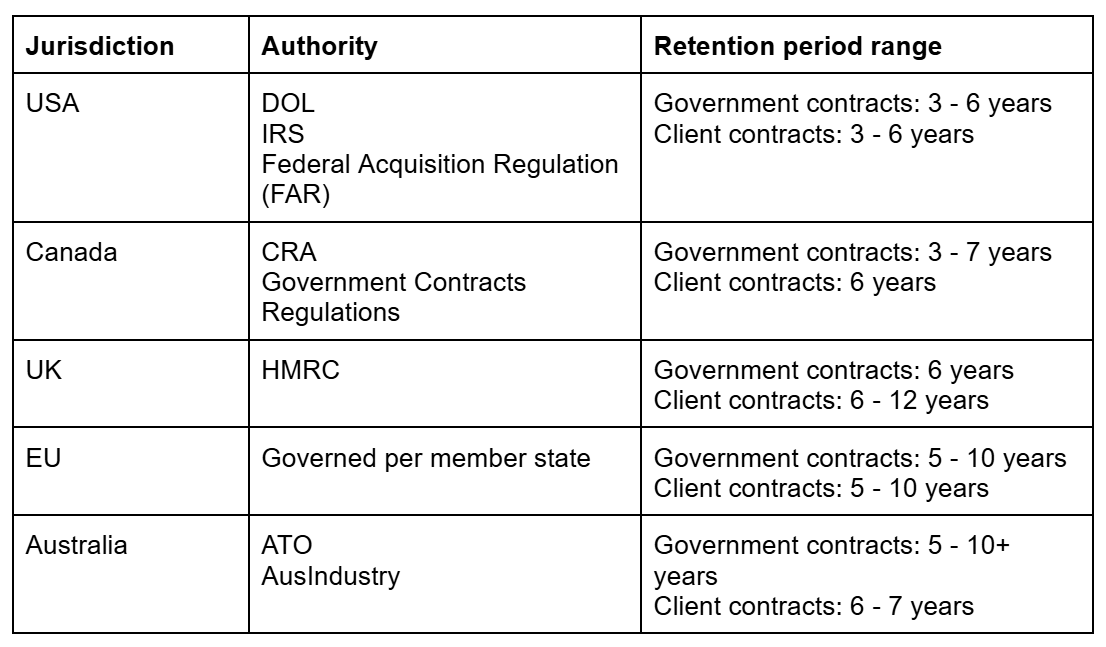
Often, retention is dictated by the contractual obligations. However, if the contract falls under a regulatory authority, such as DCAA for US-based government contractors, they will also have their own retention requirements.
Like R&D documentation, contract files can be extensive, so retain them in an organized, clearly indexed format.
They should also be easy to locate, not buried in email archives.
Here are the retention ranges:
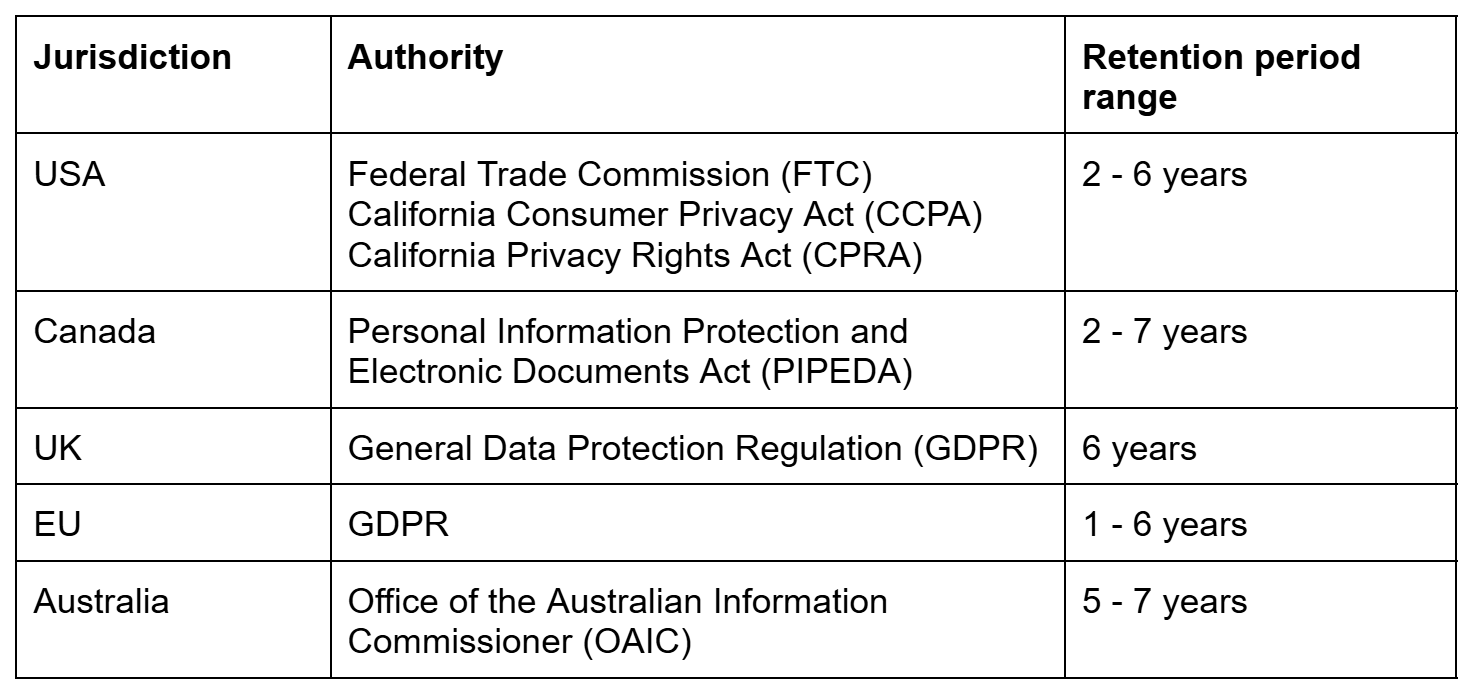
Scenario 5: Regulated work
There are a ton of regulators and data privacy frameworks that add to record retention requirements, including GDPR in Europe to HIPAA in the USA, the Australian Prudential Regulation Authority, and more.
The documentation required can vary widely by regulator. However, some core records are common throughout. These are:
- Policies, processes, and procedures
- Compliance documentation and records
- Audit reports
- Training records
- Quality records
As you can imagine, retention in this scenario is led by regulatory oversight and audit obligations.
Any organization that operates in a regulated industry should document retention requirements clearly. Regulations can often change (which usually means they get stricter), so this area requires frequent review.
Privacy laws also have rules around retaining records for too long, so a deletion process must be implemented to ensure they’re not kept for longer than necessary.
Here are the retention ranges:
Scenario 6: Procurements and vendors
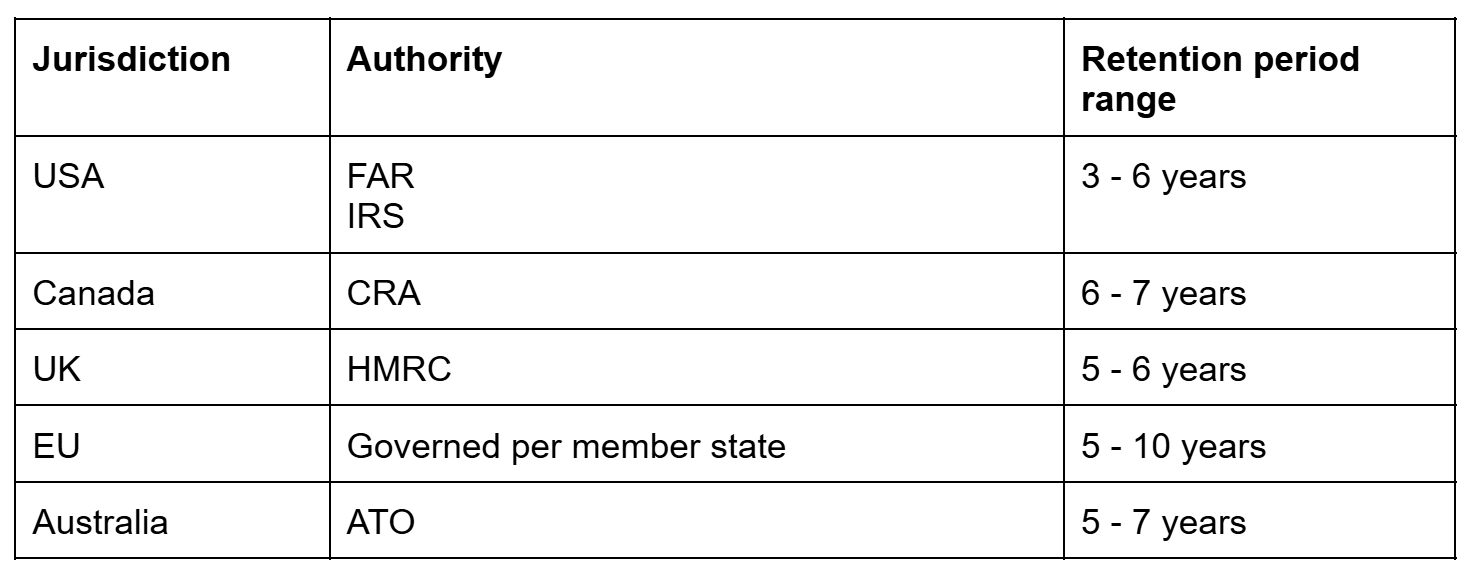
This scenario does fall into the finance and accounting bucket, but it requires its own section because extra documentation is required.
Records in this scenario include:
- Supplier contracts
- Purchase orders
- Vendor onboarding agreements
- Supplier evaluations
- Pricing agreements
- Insurance certificates
Storing procurement records supports financial audits and comes in very handy when there’s a supplier dispute. It also helps manage liability exposure.
Here are the retention ranges:
Scenario 7: Corporate governance and legal
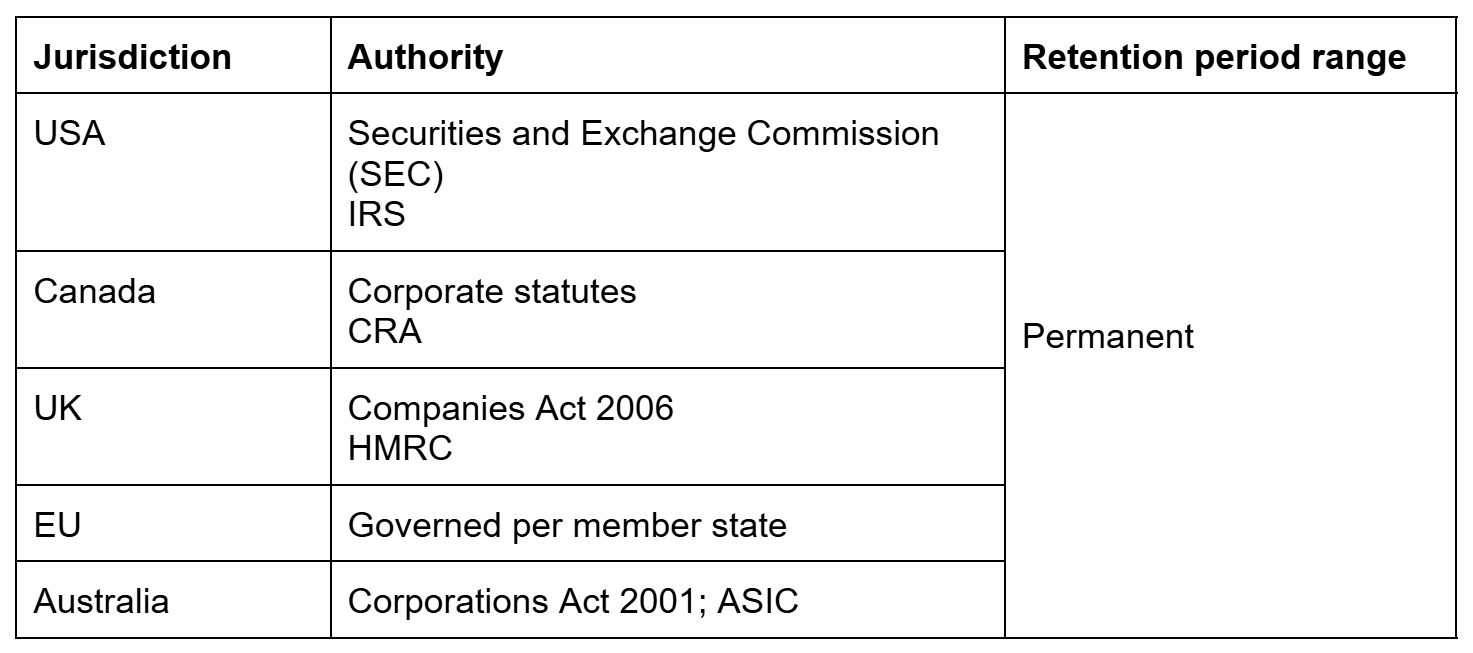
These are the records that define how an organization exists, its structure, and its operations. They are largely considered to be the most important documents a company has.
Documents here include:
- Articles of incorporation
- Shareholder records
- Board minutes
- Ownership records
- Legal opinions
- Major agreements
Central storage is essential for corporate and legal documentation. They should not exist across multiple or siloed storage devices, and in almost all cases, these are permanent records that should never be deleted.
Scenario 8: Insurance and risk management
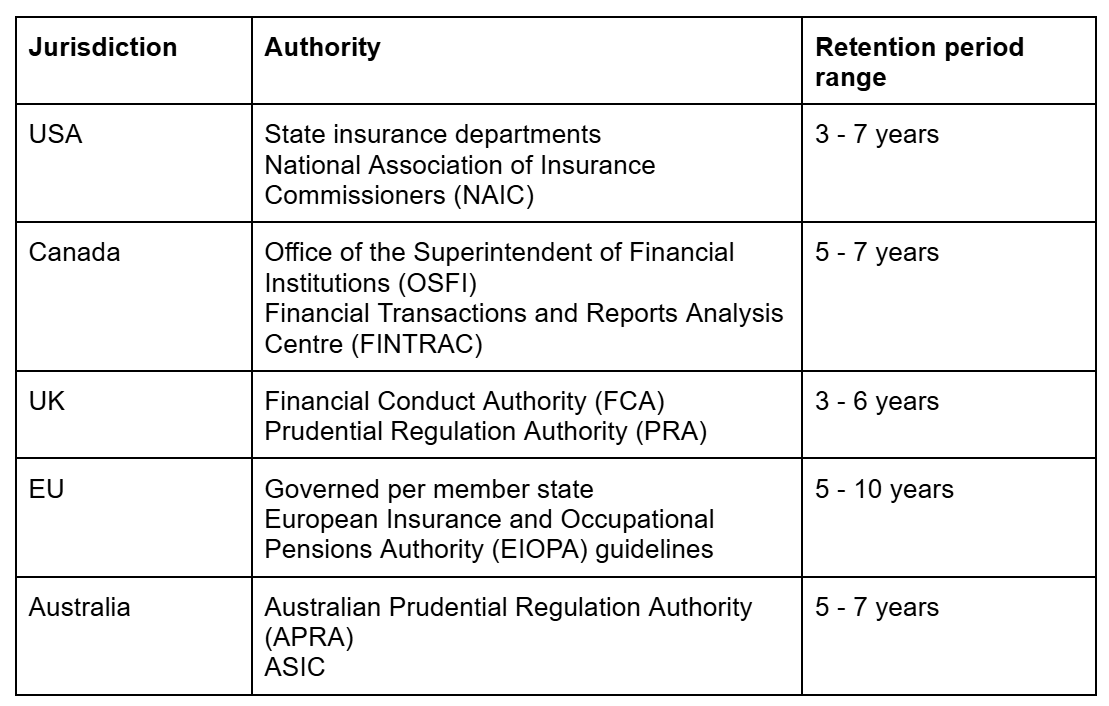
Insurance and risk management records serve to protect your organization when claims arise.
Documents in this scenario include:
- Insurance policies
- Claims documentation
- Incident and accident records and reports
- Health and safety investigations and reports
- Health and safety procedures, policies, and training reports
Liability exposure and insurance requirements drive retention. Health and safety regulators and limitation periods for personal injury claims also have retention requirements.
Here are the retention ranges:
Scenario 9: Marketing and customer acquisition
Marketing strategies often revolve around the collection of personal data. For instance, lead generation forms or discovery calls.
This data has to be handled and maintained very carefully, whether individuals become paying customers or not.
Typical records here involve:
- Customer agreements
- Marketing consent records
- Customer communications
- Support tickets
- Form submissions
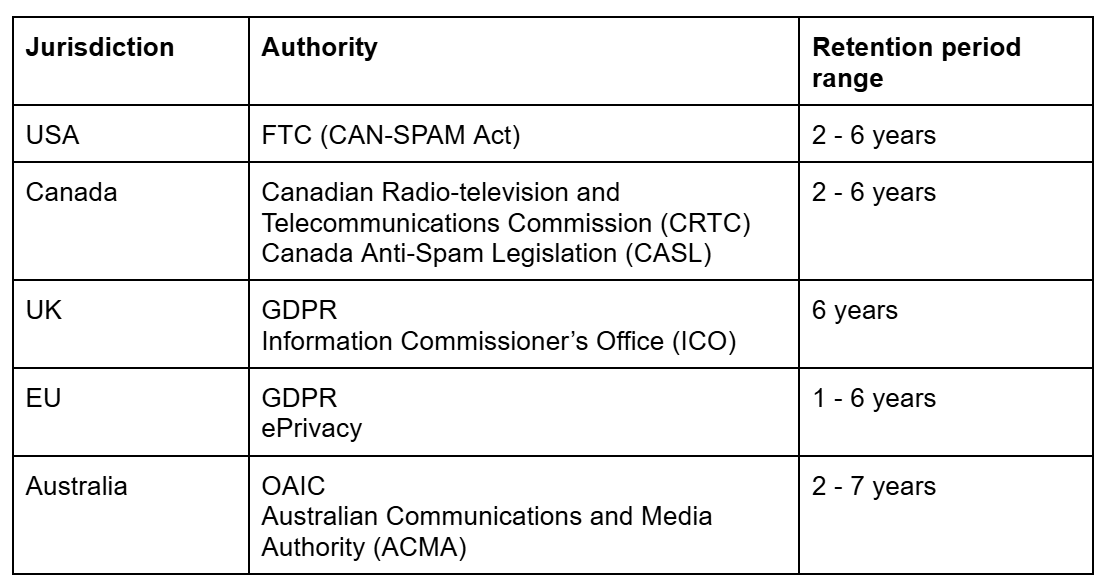
Retention is dictated by consumer protection and data privacy laws.
Privacy rules sometimes require deletion sooner than financial rules allow, which can cause confusion.
Essentially, most privacy laws state that personal data must be deleted as soon as it is no longer necessary. However, retaining it for accounting and tax purposes is a valid and necessary reason. Therefore, accounting and tax retention override privacy laws in this case.
On the flip side, if no financial transactions took place, then privacy law retention rules would need to be prioritized.
Here are the retention ranges:
Scenario 10: IT and systems
Most businesses use several digital platforms, and larger organizations may have their own proprietary software. In either case, the records these systems generate will support investigations and audits.
Keep hold of the following:
- System access logs
- User account records
- Change logs
- Backup records
- Security incident reports
- System configs
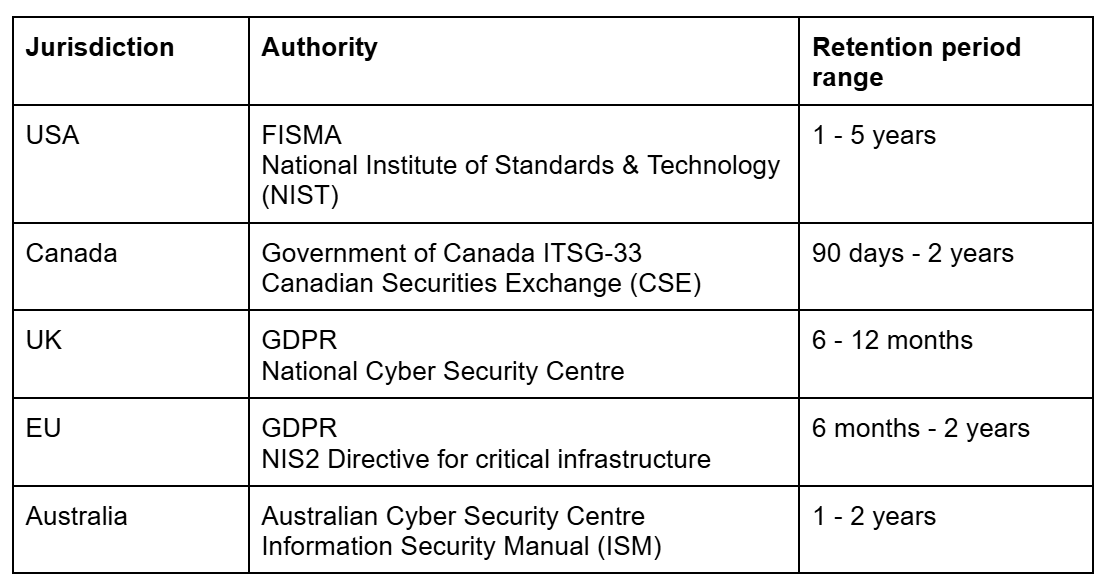
Any security investigations will want to see some or more of these records. Additionally, access logs and user account records will be necessary for compliance audits.
The retention periods are typically shorter than other types of records, yet this documentation is extremely important when needed.
Here are the retention ranges:
Scenario 11: Assets and equipment
Both physical and digital assets have record retention requirements. Here we’re talking about equipment, machinery, software subscriptions, etc. Even business property that you have purchased counts as an asset.
Here are examples of what must be retained:
- Asset registers
- Purchase and warranty documentation
- Disposal records
- Depreciation schedules
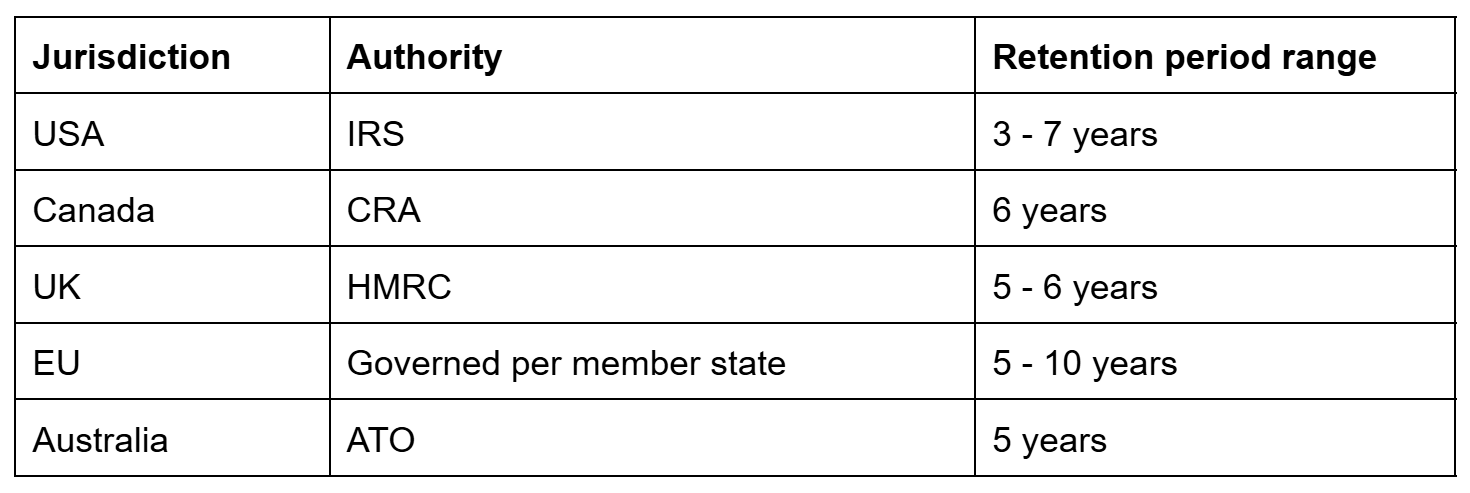
Accounting requires these records to be retained, plus they also help minimize your liability exposure.
Here are the retention ranges:
Scenario 12: Health and safety
Finally, it’s a given that heavily regulated industries must retain detailed training and safety records. However, non-regulated industries must also keep the bare minimum for compliance:
- Safety training records
- Risk assessment reports
- Incident records and reports
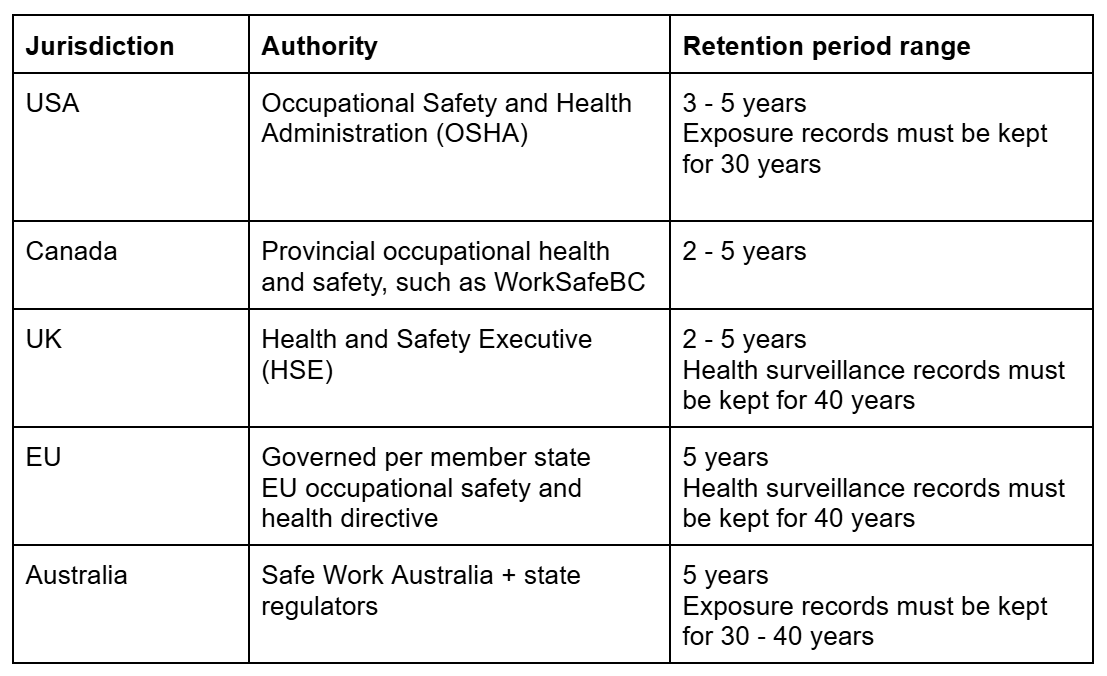
Health and safety regulators like OSHA in the US want to see safety records during inspections, and workplace safety laws require certain documents to be kept. These records are also vital if an employee raises a claim related to workplace conditions or injuries.
Here are the retention ranges:
The Cost of Bad Record Retention
Failing to retain proper records can end up costing your organization big time.
In 2024, the USA’s Fair Labor Standards Act recovered around $149 million in back wages and penalties. These costs were largely driven by poor or incomplete time and pay records, which led to overtime and minimum wage errors.
Under GDPR in Europe, fines for data protection breaches (which incorporate record retention and storage issues) can reach up to €20 million ($23.2 million) or 4% of global annual turnover.
In Canada, failure to keep adequate accounting books and records can trigger prosecution and fines of up to 50-200% of the evaded tax amount. Additionally, under FINTRAC’s anti-money laundering penalty regime, record-keeping violations can reach $1,000 per record.
Common Record Retention Mistakes (and How to Avoid Them)
Most record retention problems stem from process gaps rather than deliberate non-compliance.
To avoid problems with authorities, make sure you’re aware of these common mistakes and put measures in place to avoid them.
Lack of policy
Without a formal record retention policy, departments and employees won’t save or retain documents consistently.
They end up being kept in shared drives or even personal email inboxes, and workers make their own decisions on file naming conventions and when to delete them.
To remedy this, create and implement an organization-wide policy that defines the following:
- The main record categories used within the organization
- The retention timeframes for each category
- Approved storage locations and naming conventions
- The process for deleted records
- Who is responsible for maintaining and deleting records in each category
Keeping records for too long
Many organizations mistakenly assume that keeping records indefinitely is the safest option. The reality is the opposite, and keeping records without a valid reason can also lead to penalties.
For instance, in 2019, the AG2R La Mondiale group was fined €1.75 million ($2 million) for keeping data on millions of individuals for an excessive period of time.
Besides violating potential regulations, storing large amounts of data increases costs and makes audits more difficult and lengthy.
Define retention periods clearly for each category of records, including when and how they must be deleted. As a general rule of thumb, records should only be kept as long as there is a clear business, legal, or regulatory reason to retain them.
Performing annual retention reviews is an effective way to catch outdated records before they become a liability.
Inconsistent records across systems
This becomes an issue when an organization continues to use outdated or legacy software instead of investing in a centralized platform.
For instance, relying on multiple spreadsheets and shared drives instead of using a single accounting or HR platform.
Data and records become siloed and scattered, making it impossible to keep track of which version is the most up-to-date and whether all required documents have been retained accordingly.
While you don’t necessarily have to invest in a new platform, you do need to establish a clear “source of truth” for each record category. All documents should be placed within this centralized system and not saved elsewhere.
Where multiple systems are involved (HR, accounting, ERP platforms, and so on), define how records flow between them and which system serves as the ultimate authority.
Applying different retention rules in different departments
This generally happens when there is a lack of policy and departments are left to manage their records independently.
But, because there is overlap in departments for certain records, inconsistent recordkeeping means that some records are deleted before they should be.
To avoid this, apply your record retention policy at the organizational level with a single, defined process for storing and maintaining documentation.
Although some departments are likely to require specialized rules (regarding security and access, for example), the overall framework should remain consistent.
Making records difficult to retrieve
Even when records are retained correctly, they can fail compliance if they are poorly organized and cannot be easily retrieved.
During audits or inspections, slow retrieval can cause a lot of operational stress.
Store records appropriately by using:
- Consistent naming conventions
- Clear folder structures and indexing
- Centralized storage systems
Periodically test your storage system by locating and retrieving older records. This will confirm that your system works in reality, not just theory.
Final Thoughts
Organizations are always going to generate a lot of documentation, and retention requirements will likely get stricter over time.
Set up your retention system as early as possible and test it often. And invest in modern systems, like time tracking software, that create reliable records from the start.
This will leave you well prepared when authorities come asking for information, and in the long run, it will save you a great deal of administrative headaches.


